Law Office of
Peter Henner
(518) 423-7799
| Home |
Areas
of
Practice |
Peter
Henner |
Publications | Friends and Allies | Resume |
Contact |
LAW PRACTICE TO FIGHT FOR JUSTICE
On
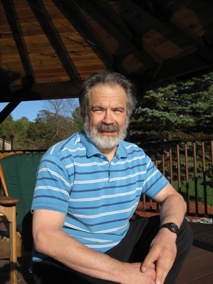
September 29, 2016, Peter Henner
died. He had been ill with
metastatic melanoma since mid-June
2016. Existing
matters are being managed by his
friend and colleague, Fred Altman,
518-690-2828.
This page describes, in his own
words, the essence of his recent law
practice and his recent concerns and
goals.
WHO I AM AND WHAT I DO
I am a veteran environmental, labor
and civil rights lawyer, with extensive litigation
experience, who has handled both civil and criminal
trials in state and federal court, and with
substantive knowledge in the fields of energy
regulation, environmental impact analysis, labor
unions, law enforcement misconduct, and correctional
facility administration. I have also written a book
about international human rights law. I am seeking
opportunities to use this experience to confront and
oppose powerful and corrupt institutions, in either
the public or private sector. I am not seeking to grow
a law practice; I have been there and done that, and
fortunately no longer need to make money practicing
law. I also do not feel a need to do legal work
for its own sake; my practice is limited to matters
that promote social justice and/or are of particular
interest to me.
Today, I only do legal
work that I believe has some social or political
importance, addresses an issue that I find
intriguing, or assists a long-time client or good
friend. I also must believe that I have a
reasonable chance of success; I have tilted at too
many windmills in my career. I only want to use
law to
continue the struggle against corporate and
governmental entities that are abusing their power
and/or who are determined to seek greater profits
at the expense of humanity. I also want to help
individuals and groups that are working for social
justice or are fighting for employee rights, civil
rights and to preserve the environment.
HOW I GOT
HERE
From August 1984 until June 1, 2012,
I maintained a full-time 50+ hour a week solo law
practice, dedicated to the representation of
individuals and organizations fighting for social
justice, particularly when my clients were wronged by
the actions of large corporations or governmental
entities. My practice was a direct extension of
my political and social activism in the late 1960s and
I never forgot why I became a lawyer. I wanted to use
law to fight for democratic principles and human
rights, including worker rights, civil liberties and a
clean and healthy environment, and to protect those
rights from powerful and greedy forces. The focus and
principal accomplishments of my practice can be found
on the Overview page of this website.
However, I must admit that, for most
of my career, I subscribed to the notion that a lawyer
could never have too many clients or too much work. Like most
lawyers in private practice, I took satisfaction from
the fact that I was getting paid well for legal work
that was neither socially useful nor intellectually
interesting. Those days are over. I am no
longer seeking cases or projects that will generate
billable hours doing boring or useless things, or
where I am representing people, organizations or
institutions that I do not like.
Upon turning 60, in July 2012, I
wanted to make sure that I took the time to pursue
other interests, including competitive chess, a
variety of outdoor activities, and several writing and
scholarly projects. But it was
never and still is not, my intention to retire; I
simply needed to make sure that I made the time to do
things that were important to me since I no longer
needed to practice law for economic reasons, and, as
described below, was disillusioned and disgusted with
the American legal system.
Since I closed my full-time office, I
have learned that it is not so easy to stop being a
lawyer. I still want to actively participate in the
fight for a just, environmentally sustainable and
peaceful world. Activists continue to ask for my help,
and my legal skills and experience are still the best
contribution that I can make to the struggle for
justice. Unless I am willing to withdraw from all
community and political activity, I will always be a
lawyer, and will look to participate in issues as a
lawyer. When I am asked to participate in a political
or social issue, I ask the kinds of questions a lawyer
asks, approach the issue as a legal problem, and
occasionally respond by getting involved as a lawyer.
I am
still doing cases and getting involved in
political and legal struggles, and will continue
to do so.
THE AMERICAN
LEGAL SYSTEM
In September 2013, the Altamont
Enterprise published my article “Goodbye to
all that, why I stopped practicing law to do more
useful things.” In the 2000 word article, I
explained why the legal system had become sclerotic,
dysfunctional and corrupt, and why I wanted nothing
more to do with it. I am still in awe of the
complex structure of the common-law system, appreciate
its historical and social context, and love the
fascinating intellectual challenges in the legal
analysis of problems. However, the reality of the
practice of law in the United States in the 21st
century has little to do with the fair adjudication of
disputes, the rational development of legal
principles, and certainly little to with the concept
of "justice." Instead, law practice is dominated by
politicized judges, the bullying tactics of
self-important big law firms, cumbersome and expensive
procedures that price most people out of the market
for legal services, and an inability to resolve cases
in real time.
I have lost respect for the “legal
profession.” However,
I identify with the samurai in the Japanese movie
“Hara-Kiri. ” The samurai completely exposes the
hypocrisy of the warlords who dominate the martial
order and enforce the samurai code, just as I hope to
expose the hypocrisy and self-righteous smugness of
the American legal system. Nevertheless, in the last
scene of the movie, he demonstrates his adherence to
that code. Similarly, I continue to follow all of the
ethical and legal requirements set forth in the Code
of Professional Responsibility, take pride in the fact
that I have never been disciplined, sanctioned or
cautioned for ethical misconduct since my admission to
the bar in 1980, continue to judge moot court
competitions, produce scholarly publications and make legal presentations.
The American legal system is badly
broken. However, there are many lawyers that attempt
to fight for justice in countries whose legal systems
are far worse. These lawyers may face personal risks
that are inconceivable to an American lawyer. American
lawyers, unlike lawyers in many countries, do not
fear arbitrary arrest, assault or even murder by
governmental agents. I am keenly aware that courageous
lawyers stand up for human rights in repressive
countries like China, at the risk of being sent to
reeducation camps. Women lawyers in Saudi Arabia
attempt to use their legal system to defend and expand
the very limited rights given to women, even though
the lawyers risk arrest, and as women, are denied the
most basic personal civil rights by their legal
system.
Since lawyers in China, Saudi Arabia
and other countries can try to work for justice in
their legal systems, I should be able to do the same,
without complaining about the failures of the American
legal system, and I am attempting to do so.
WHAT ABOUT PRO BONO?
I am emphatically not seeking
"opportunities to do pro bono work." Pro bono
clients are not necessarily any more deserving than
paying clients, their causes are frequently unlikely
to succeed, and the legal issues raised are no more
interesting than the issues raised in paying work. The
only difference between pro bono work and paid work is
the payment. Like Woody Guthrie, "I do not sing for
bad causes" and I expect to be paid when I work
for good ones.
Large "biglaw" firms that customarily represent
powerful corporations perhaps derive some public
relations benefit by doing "pro bono" work, but public
interest lawyers simply get a reputation for being a
soft touch. I usually represent plaintiffs suing large
organizations, community and environmental
organizations and individuals of limited means. My
paying clients would have a legitimate complaint if I
represented similar clients for free. Furthermore, too
many pro bono clients, including community and
environmental organizations, can and should do their
own fund-raising, rather than look for a free lawyer.
I have also learned that pro bono services are not
always appreciated by clients, sometimes because the
clients are not paying for them, and sometimes because
the clients think that their pro bono lawyer is not as
good as a paid lawyer.
When I maintained a full-time
practice, I did not distinguish between paying and pro
bono clients, and will not do so today. My fee
arrangements with my clients are private matters, and
I will not stigmatize a client by referring to
him or her as a "pro bono client." The New York
State Office of Court Administration requires lawyers
to disclose the number of hours that a lawyer devotes
to pro bono work on their bi-annual registration
statements, with the apparent goal of encouraging
lawyers to do pro bono work. I answer "zero." I
will not accept nor do I expect any recognition for
pro bono work. I believe that the bar association's
touting of pro bono work is hypocritical at best,
especially since work for clients of limited means
that is performed at a discounted rate, and
contingency cases that are not justified as a business
risk, but are undertaken because they are in the
public interest, do not qualify as pro bono work.
Partial Docket as of
April 2016
1) Broadband
access in New York State.
More than 1 million New Yorkers, especially in rural
areas, lack adequate access to broadband. Without
such access, they are effectively precluded from
participating in 21st century society; businesses
cannot operate effectively, children cannot do their
homework, and people are effectively cut off from
political social and cultural activities. This is a
matter of concern to me; my office is located
in a rural area with a slow, sometimes completely
dysfunctional connection. I took personal offense
when Governor Cuomo announced a "Broadband for All"
campaign, while simultaneously taking action to
ensure that legislatively appropriated monies would
not be used to provide broadband for people who need
it most. In the last year, I have become
increasingly involved in the struggle for broadband
equity; filing comments, legislative testimony,
litigating Freedom of Information Law issues,
contacting state and local officials, and other
forms of advocacy. On May 5, 2016, I filed a lawsuit
against Empire State Development, seeking to enjoin
the Governor's Broadband Program Office from
misspending the legislative appropriation.
2) Freedom of Information
Law. From
1996 through 1998, I published and edited the
Sunshine Newsletter, a monthly publication dedicated
to governmental access issues, and have always been
involved in such issues. I am working with another
attorney to develop a program to vigorously enforce
the Freedom of Information Law in New York State,
particularly with respect to New York State agencies
that systematically stonewall information requests
by excessive delay.
3) Chess Promoter. I am the president of the
Albany Area Chess Club, and have been active in
promoting chess activities in the capital district.
I played a crucial role in arranging for the Siena
College Chess Club to bring the Continental Chess
Association to the campus to conduct the first
Bill Little Memorial tournament on April 1-3, 2016,
the first Grand Prix chess event in the Capital
District in many years, and in arranging for a
series of chess tournaments to be held at Proctor's,
a major entertainment venue in Schenectady.
4) Novel Writer. I am working on an
autobiographical novel, based upon my experiences as
a young lawyer working as the General Counsel of a
statewide union representing New York State
Correction Officers in the early
1980s.
5) Miscellaneous matters. I am handling a
few matters for labor unions, individual employees,
and provide advice and guidance to environmental and
community organizations.